
Learning Polish in Poland gives you something that is difficult to recreate with textbooks or apps alone: regular contact with the language in real situations. You can learn a new expression during a lesson and use it the same day in a café, shop, workplace or conversation. However, simply living in Poland does not guarantee...
Bez kategoriiLearn Polish in Poland: Courses, Immersion and Practical Learning

Learning Polish in Poland gives you something that is difficult to recreate with textbooks or apps alone: regular contact with the language in real situations. You can learn a new expression during a lesson and use it the same day in a café, shop, workplace or conversation.
However, simply living in Poland does not guarantee progress. The most effective approach is to combine structured lessons with deliberate everyday practice. If you want to learn Polish in Poland, choosing the right course, maintaining a realistic study routine and actively using the language outside class are key.
Key Information About Learning Polish in Poland
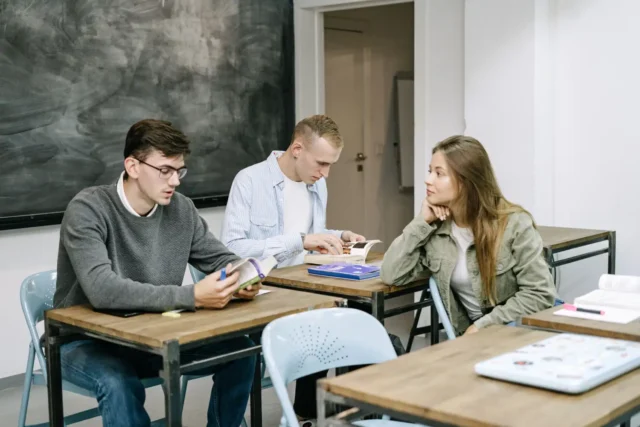
The most effective way to learn Polish in Poland is to combine structured language lessons with regular real-life practice. Classes provide grammar, vocabulary, pronunciation and feedback, while everyday situations give you opportunities to turn that knowledge into practical communication.
Living in Poland increases your exposure to the language, but exposure alone is not enough. Consistent study, active speaking and regular revision are what turn immersion into measurable progress.
Why Learn Polish in Poland?
The main advantage of learning Polish in Poland is the connection between formal learning and immediate practical use.
In a classroom, you might learn how to order food, ask for directions, arrange an appointment or describe a problem. Outside class, you can encounter exactly these situations and test what you have learned.
This creates a useful learning cycle:
learn → notice → use → receive feedback → correct → reuse
For example, after learning expressions for ordering food, you can deliberately use them in a café or restaurant. If you discover that you cannot express something you need, that gap becomes a clear objective for your next lesson or revision session.
A structured course also helps you make sense of the Polish you hear around you. Instead of encountering unfamiliar words and grammatical forms randomly, you gradually learn to recognise patterns and connect everyday exposure with material studied in class.
Say Polish offers Polish language courses for foreigners in several Polish cities as well as online.
How Does Language Immersion Help You Learn Polish?
Language immersion means being regularly exposed to Polish in situations where the language has a real purpose.
In Poland, this can happen while using public transport, shopping, working, studying, visiting an office or talking to neighbours. Signs, menus, announcements and everyday conversations also provide continuous contact with written and spoken Polish.
The value of immersion comes from repetition and context. A word encountered in a textbook can be difficult to remember. The same word encountered during a lesson, on a sign and later in a conversation becomes connected with several situations, making it easier to recognise and reuse.
However, immersion works best when it is active rather than passive.
Hearing Polish around you every day does not automatically mean you are learning it. You need to notice expressions, attempt to use them, identify gaps in your knowledge and return to difficult areas during lessons or revision.
Why Combine Polish Classes With Everyday Practice?
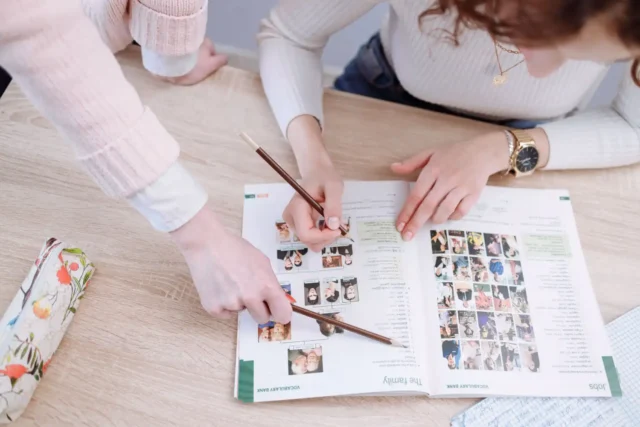
Structured lessons and everyday immersion solve different learning problems.
A teacher can explain why a sentence is constructed in a particular way, demonstrate pronunciation, introduce vocabulary systematically and correct mistakes. Everyday interactions then force you to retrieve this knowledge without relying on a prepared exercise.
This combination develops the main language skills together:
- speaking through conversations and everyday interactions;
- listening through lessons and exposure to naturally spoken Polish;
- reading through course materials, signs, menus, notices and messages;
- writing through exercises and practical written communication;
- grammar and vocabulary through structured learning followed by practical use.
The goal is not simply to know more Polish. It is to make the language increasingly available when you actually need it.
Which Polish Course Format Should You Choose?
The best course format depends on your goals, schedule and how much time you can realistically dedicate to learning between lessons.
More intensive does not automatically mean more effective. A course you can attend consistently and support with regular practice may produce better results than a demanding programme you frequently miss.
Intensive Polish Course
An intensive Polish course provides frequent contact with the language and is designed for learners who can dedicate more time to classes and revision.
It can be particularly useful after moving to Poland or when you want Polish to become a significant part of your daily routine.
The important question is whether you have enough time not only to attend lessons but also to consolidate what you learn.
Semester Polish Course
A semester Polish course spreads learning over a longer period.
This format can be easier to combine with employment or university because students have more time between lessons for revision and practical language use.
It can be a good choice if your priority is steady, systematic development rather than concentrating many lessons into a short period.
One-Year Polish Course
A one-year Polish course is designed for longer-term learning.
The extended timeframe gives learners more opportunities to revisit difficult material, consolidate vocabulary and grammar and gradually develop more independent communication.
It may suit people planning to remain in Poland and make Polish part of their everyday, academic or professional life.
Private Polish Lessons
Private Polish lessons provide individual attention and greater flexibility in lesson content.
They can be useful if you have a specific objective, need professional vocabulary, want to concentrate on conversation or pronunciation, or require preparation for a particular examination.
Individual lessons can also make sense when your work or study schedule makes regular group classes difficult to attend.
How to Choose the Right Polish Course in Poland
Start with your goal, not with the number of lessons.
Someone who needs Polish for everyday independence may require a different learning plan from a university student or a professional who primarily communicates at work.
Before choosing a programme, consider:
- your current level of Polish;
- situations in which you need to use the language;
- how quickly you want to progress;
- how many lessons you can realistically attend;
- how much time you have for practice between classes;
- whether you prefer group or individual learning;
- whether you need general or specialised Polish.
Your timetable matters more than it may initially appear.
Choosing five lessons per week is not necessarily better than choosing two or three if the more intensive schedule leaves no time for revision or results in frequent absences. Consistency is more useful than intensity you cannot maintain.
Does the City Matter When Learning Polish in Poland?
You can learn Polish effectively in different Polish cities. The more important question is whether your location allows you to attend classes regularly and use the language in your everyday routine.
Say Polish provides classroom courses in several major cities:
- Polish courses in Warsaw
- Polish courses in Krakow
- Polish courses in Wroclaw
- Polish courses in Poznan
- Polish courses in Gdansk
- Polish courses in Katowice
When comparing locations, consider practical factors such as commuting time and whether the schedule fits your daily responsibilities.
A convenient location can make regular attendance easier, and regular attendance is more important for long-term learning than choosing a city simply because it appears more attractive as a study destination.
Can You Learn Polish Online While Living in Poland?
Yes. Online lessons and immersion in Poland can complement each other.
Live online classes can provide structure, explanations and teacher feedback without requiring you to commute. You can then practise the same language in real situations outside your home.
This combination can be particularly practical for people with irregular working hours or those who do not live close to a classroom location.
Learners can choose live Polish courses online or use a self-study Polish video course for independent learning.
The key difference is interaction. Live lessons provide opportunities for immediate communication and feedback, while self-study materials give you greater control over when and how often you study.
How to Use Poland as Your Language Classroom
One of the biggest advantages of learning Polish in Poland is that practice does not have to end when the lesson finishes.
You also do not need to create complicated learning activities. Small, repeatable tasks can turn normal daily routines into language practice.
Set One Daily Communication Task
Choose one simple interaction that you will deliberately complete in Polish.
It might be ordering a drink, asking where something is, speaking briefly with a colleague or asking a question in a shop.
The objective is not to have a perfect conversation. It is to practise retrieving Polish when you actually need it.
Read the Polish Around You
Menus, transport information, notices, signs and product labels provide useful vocabulary in context.
Instead of trying to understand every word, identify expressions that appear repeatedly and are relevant to your daily life.
Learn Phrases, Not Only Individual Words
A notebook filled with isolated vocabulary can be difficult to translate into fluent communication.
Record complete expressions that you can reuse. Learning how a word appears inside a useful phrase gives you information about both meaning and structure.
Listen Actively
Polish spoken around you can become a learning resource if you actively notice it.
Listen for expressions you already know, pronunciation patterns and phrases that repeatedly occur in similar situations.
Review Real Conversations
After an interaction in Polish, think about what you were able to say and where communication became difficult.
If you wanted to express something but lacked the vocabulary or grammar, write it down. That gap becomes useful material for your next study session.
Common Mistakes When Learning Polish in Poland
Waiting Until Your Polish Is “Good Enough” to Speak
Speaking confidence usually develops through speaking. If you wait until you can construct perfect sentences, you lose one of the main advantages of living in Poland: access to regular real-life practice.
Start with the Polish you already have and gradually increase the complexity of your conversations.
Switching to English Immediately
When a conversation becomes difficult, switching languages can be tempting.
Instead, try to complete at least part of the interaction in Polish. Even one additional question or sentence gives you retrieval practice that passive exposure cannot provide.
Studying Grammar Without Using It
Polish grammar is important, but knowing a rule and using it spontaneously are different skills.
After learning a new structure, deliberately create opportunities to use it in speaking or writing. This helps move knowledge from an exercise into practical communication.
Choosing an Unrealistic Course Schedule
A demanding programme only works when you can attend it consistently.
If work or university frequently prevents you from joining lessons, a less intensive but sustainable programme may be more effective.
Comparing Your Progress With Other Learners
Students progress at different rates because their previous language experience, study time and opportunities for practice differ.
A more useful comparison is with your own previous ability: which situations can you now handle in Polish that were difficult a few weeks or months earlier?
Expert Insight: Turn Immersion Into a Feedback Loop
The biggest advantage of learning Polish in Poland is not simply that you hear more Polish. The real advantage is how quickly you can connect a lesson with a real communication problem.
Use this as a deliberate feedback loop:
1. Learn a useful structure or expression during class.
2. Use it in a real situation.
3. Notice what you cannot yet express or understand.
4. Check the missing language with your teacher or learning materials.
5. Reuse the corrected expression in another situation.
This approach makes everyday life part of the learning process.
It also gives your lessons a clearer purpose. Instead of studying Polish only according to a textbook sequence, you continuously bring real communication needs back into your learning.
A second useful principle is to measure progress through tasks rather than chapters.
Ask yourself whether you can now order something without switching to English, make an appointment, explain a problem, understand an announcement or have a short conversation with a colleague. These are practical indicators that your Polish is becoming more useful.
Frequently Asked Questions
Is It Easier to Learn Polish While Living in Poland?
Living in Poland provides regular exposure to Polish and more opportunities for real-life practice. However, progress still depends on active language use, structured learning and consistent revision rather than location alone.
What Is the Best Way to Learn Polish in Poland?
Combine structured lessons with regular everyday practice. Learn vocabulary and grammar in class, use them in real situations and bring communication problems back to your teacher or study materials for correction.
Do I Need to Know Polish Before Moving to Poland?
No. Complete beginners can start learning Polish after moving to Poland. Knowing a few basic expressions before arrival can nevertheless make initial everyday interactions easier.
How Quickly Can I Start Speaking Polish?
Beginners can start using greetings, questions and simple everyday expressions early in the learning process. Becoming independent in longer conversations requires more time and depends on lesson frequency and practice.
Should I Choose an Intensive or Semester Polish Course?
Choose an intensive course if you have time for frequent lessons and revision. A semester course may be more suitable if you need to combine Polish learning with work, university or other regular commitments.
Can I Learn Polish Online and Still Benefit From Immersion?
Yes. Online lessons can provide structured learning and feedback while living in Poland gives you opportunities to practise what you learn in everyday situations.
Learn Polish in Poland: What Matters Most?
The best way to learn Polish in Poland is to connect structured learning with everyday communication. Classes help you understand grammar, develop vocabulary and correct mistakes, while daily life provides opportunities to turn that knowledge into a practical skill.
Choose a course that matches your level, objectives and realistic weekly schedule. Then make deliberate use of the language outside class: speak before you feel completely ready, notice recurring expressions, identify communication gaps and reuse corrected language.
Living in Poland gives you access to immersion. What determines its value is how actively you use it.
If you need help choosing a city, level or programme, contact Say Polish and provide information about your current level, schedule and learning goals.